
I have strong feelings about Spotify, both positive and negative. On the upside, for less than $100 I can upload an album, and it can be heard almost anywhere in the world within a few days. My last physical release was the CD version of Film Noir by The Drownies back in 2006. The 13 subsequent albums I’ve played on (under The Drownies, The Calls, Over My Dead Brody, Fiberglass Building Insulation, and Vague Pains) exist only in electronic form. That has saved me a lot of hassle, expense and space in my basement.
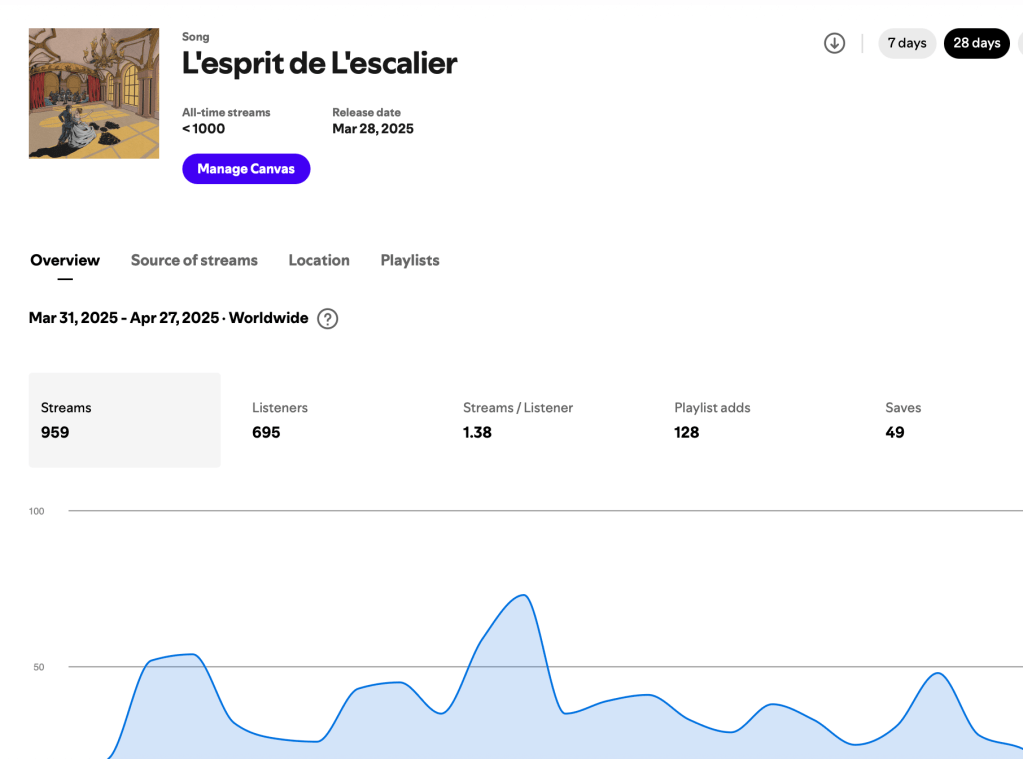
However, this fascinating yet depressing video lays out the negative effects of services like Spotify have far better than I could. Suffice it to say now you live or die by the algorithm, which on Spotify means playlist placements. Every local artist knows the existential dread of seeing your music’s play count stuck at the shameful “<1000 plays” level, the equivalent of not existing at all. It’s not just about the bruised ego of the artist (though it is that too); Spotify won’t even pay their minuscule royalties until your song crosses that line, and there won’t be a critical mass of listens for your music for the algorithm to know how to recommend it to new listeners.
As in my previous post on paid album reviews, there are people happy to sell desperate artists the promise of a solution, but buyer beware. On Fiverr it’s easy to find people promising “organic Spotify promotion” for around $20. Sound too good true? It is. They’re selling bot listens, which temporarily boost your numbers until Spotify inevitably flags them as fraudulent and removes them. On Fiverr, the reviews for these shady services are split into 1 star (from the people who post their review after seeing the listens taken away) and 5 star (from those who haven’t yet had Spotify drop the hammer). Here’s an example I found:

The telltale signs of these Fiverr ripoffs are that they are cheap (typically under $50), don’t ask to listen to the music before they take your money, accept all genres, and are offered by new accounts (“New Sellers” and “Level 1 Sellers”), since the accumulation of bad reviews means they need to constantly spin up new profiles.
There are legit people on Fiverr doing Spotify promotion, but they can’t promise results, cost more, and in their negative reviews you’ll see people complaining about getting fewer listeners than they’d hoped- a sign that there are actual humans involved.
Submit Hub is another site selling artists the promise of streams. You can purchase credits which can be cashed in for song submissions to users who curate popular Spotify playlists (and other music discovery places). To be clear, these aren’t official Spotify editorial playlists, but user-generated ones which have accumulated a lot of followers. My impression is that the Submit Hub curators get a cut of the money you pay into credits whether they take your song or not. Bot listens on these playlists are presumably rare since getting banned by Spotify would cut off the Submit Hub money. The positive is that they need to select songs that are actually good since listeners will unfollow the playlist if quality suffers. The negative is that they can reject almost every song that is submitted and still make money. For example, here are my results for a song from the new album:
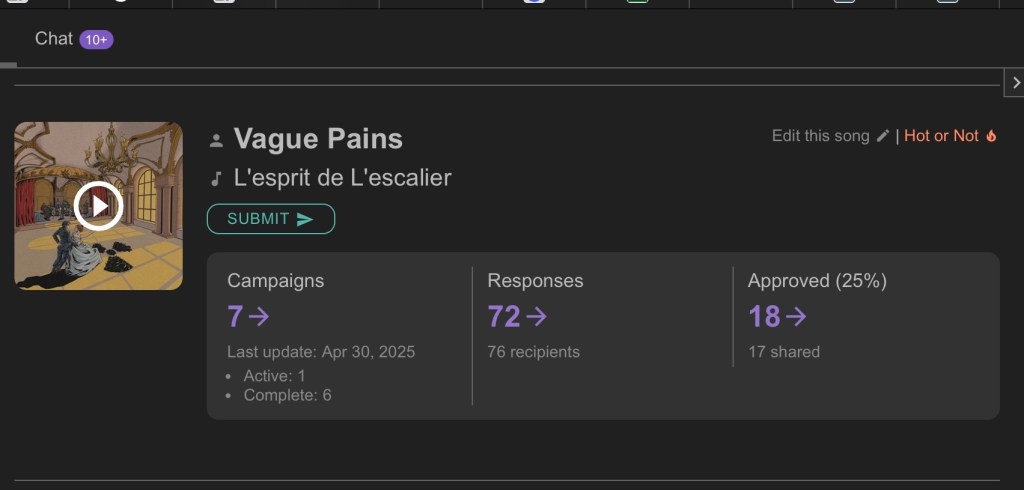
According to the website an approval rate around 25% is typical for submissions, with playlists having more listeners typically being even more selective. By using the intermediate step of buying credits, which are used to purchase submissions (at up to 4 credits a pop), it’s easy to lose sight of the fact you are spending dollars to earn fractions of pennies.
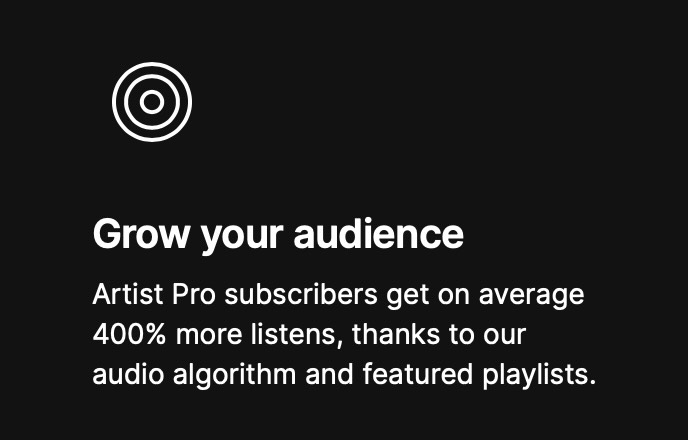
But the worst, the absolute most egregious is Soundcloud. If you pay for an “Artist Pro” account they just outright promise listens. No middleman or pretense. Just straight pay for play.
Playing the playlist game is expensive. It can feel like you are paying to promote your release, believing in yourself and just trying to get your music heard. Over time it feels more and more like you are just burning cash at a casino where the house always wins. I’ve fallen for just about every trick over my 20 some years of releasing music, but I’ve also learned a few things which I will share in the next post.
 Vague Pains